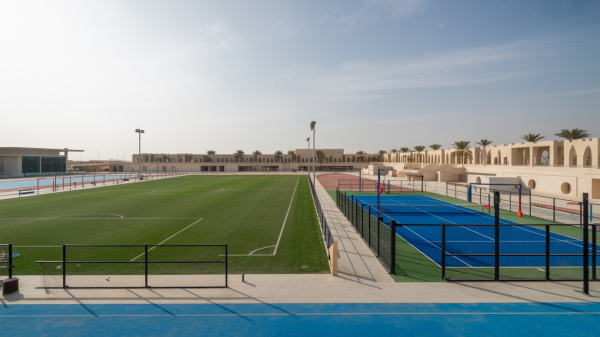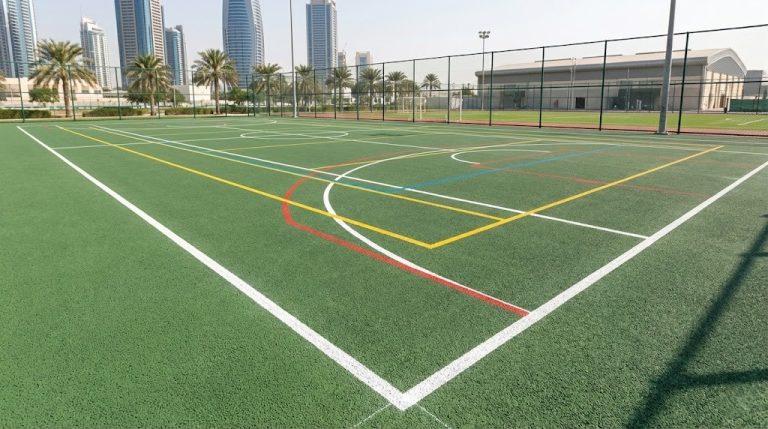
Designing Children Sports Fields: 13 Essential Safety Standards & Requirements in the UAE (Forsan Alamal Alsareaa Guide)
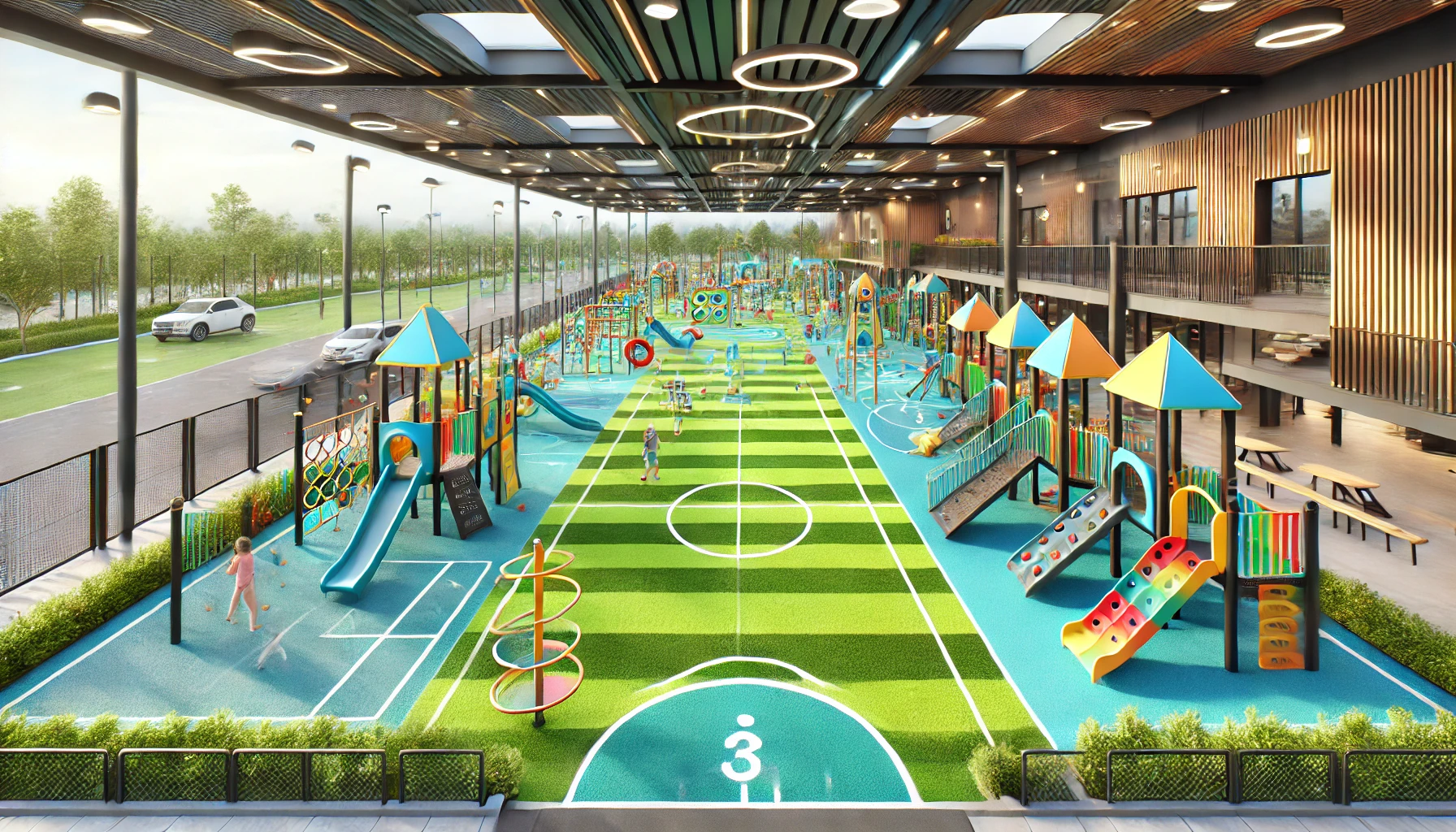
Designing Children Sports Fields is not a “nice-to-have” design exercise—it is an engineering and safety discipline that directly affects how children move, learn, socialize, and build confidence. A well-planned field supports coordination, balance, decision-making, and teamwork. A poorly planned one can create avoidable injury risks, operational headaches, and higher maintenance costs.
In this practical UAE-focused guide, Forsan Alamal Alsareaa Company (فرسان العمل السريع) explains the standards and essential requirements we use to deliver sports and play areas that are safe, durable, climate-ready, and age-appropriate. You will also find planning checklists, material comparisons, and implementation steps that help owners, schools, and developers make better decisions from day one.
Why Designing Children Sports Fields uae Matters
Children do not “use” a sports field the same way adults do. They run unpredictably, change direction faster, fall more often, and use equipment in creative ways. That is why Designing Children Sports Fields uae must start from real child behavior, not only from a nice-looking layout.
When planning is done correctly, children sports fields uae can deliver measurable benefits:
- Physical development: strength, balance, agility, coordination, and cardio fitness.
- Social development: teamwork, rule-following, turn-taking, and conflict resolution.
- Cognitive development: spatial awareness, problem solving, and decision making under movement.
- Emotional development: confidence, resilience, and a healthy relationship with challenge.
- Public health impact: supporting active lifestyles and reducing sedentary behavior.
For owners and operators, the “real win” is a facility that stays safe and attractive over time: fewer incidents, fewer complaints, and less unplanned downtime. Good design protects both children and your investment.
Designing Children Sports Fields UAE & GCC: The Reality of Climate and Operations
In the UAE and GCC, you can rarely copy a design from a mild-climate country and expect it to perform the same. Heat, UV exposure, sand, humidity (in coastal areas), and year-round usage patterns create specific constraints that must be engineered into the solution.
Key environmental and operational factors
- Thermal comfort: surfaces and equipment can become extremely hot under direct sun; shade strategy is not optional.
- UV degradation: plastics, coatings, and some turf yarns deteriorate faster without UV-stable specifications.
- Sand and dust: sand intrusion affects drainage layers, joints, and surface traction; design should anticipate cleaning.
- High usage intensity: schools and communities can generate heavy daily traffic; materials must be wear-resistant.
- Water management: rare but intense rain events require robust drainage to prevent ponding and slip hazards.
That is why Forsan Alamal Alsareaa treats Designing Children Sports Fields as a complete system: surface + base + equipment + shade + drainage + access + maintenance plan. The system approach is what protects performance after handover—not cosmetic finishing.
For related UAE construction references, you may also review:
13 Essential Safety Standards & Requirements for Designing Children Sports Fields
The following requirements represent a practical “field checklist” we use to reduce risk and improve long-term operating quality. Many of these requirements align with globally recognized safety frameworks (for example EN 1176 / EN 1177 concepts, and industry guidance such as IPEMA-related programs), but the implementation is adapted to UAE project realities.
1) Clear user profile and age segmentation
Before selecting any surface or equipment, define who the field is for and how it will be used. A kindergarten play zone is not the same as a school multi-sport mini pitch. Age segmentation reduces conflict between children with different abilities and speeds.
2) Safe fall zones and impact-attenuating surfacing
Falls are normal. The goal is to reduce injury severity when falls happen. That means specifying impact-attenuating surfacing, verifying fall height expectations, and maintaining safe clearances around equipment. In many projects, the surface is the single most important safety decision.
3) Slip resistance, traction, and predictable movement
Traction must be consistent in dry and wet conditions. Overly “grippy” surfaces can increase trip incidents, while overly smooth surfaces increase slips. Proper slope and drainage also protect traction by minimizing standing water.
4) Rounded edges, safe connections, and tamper-resistant details
Children explore by touching, pulling, climbing, and sometimes misusing components. Fixings, covers, joints, and connections should be tamper-resistant and free from sharp points or pinch zones.
5) Controlled access and perimeter safety
Where the field is near roads, parking, or mixed-use areas, controlled access becomes critical. Perimeter fencing or soft barriers can prevent run-outs, reduce conflict with other users, and improve supervision control.
6) Visibility and supervision lines
Design for adults who supervise. Avoid blind corners, hidden zones behind tall equipment, or excessive partitioning. A safe field is one where supervisors can see quickly and intervene early.
7) Shade strategy as a safety requirement
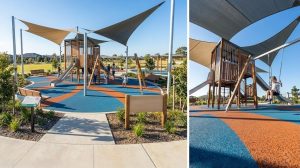
In the UAE, shade is not “comfort”—it is risk control. Shade reduces heat stress and limits surface temperatures. Solutions include tensile structures, fixed canopies, shade sails, and strategic landscaping.
8) Thermal-safe materials and color selection
Darker surfaces and metal components can become hotter. Material and color choices should consider heat absorption. In some applications, selecting lighter tones and UV-stable finishes improves comfort and durability.
9) Drainage performance and water flow management
Standing water increases slip risk and accelerates material degradation. Drainage design must include slope control, base layer permeability, and safe water discharge routes that do not create puddles or erosion.
10) Age-appropriate challenge and progressive difficulty
A good field offers challenge without creating “unmanaged risk.” Provide progressive difficulty: simple zones for younger children and more advanced elements for older groups. This keeps children engaged and reduces unsafe improvisation.
11) Inclusive access and universal design
Design should welcome children of different mobility and sensory needs. This includes accessible paths, inclusive equipment, and spaces that support different play styles—not only physical competition.
12) Lighting and visibility for evening use
If the field will be used after sunset, provide safe lighting that avoids glare and dark zones. Energy-efficient LED systems with appropriate positioning can provide visibility while controlling operational costs.
13) Maintenance planning and documented inspection routines
Safety is not achieved at handover; it is maintained. A facility needs planned inspections, simple cleaning access, spare parts strategy, and clear responsibilities. This is often the most overlooked part of Designing Children Sports Fields, yet it has the biggest impact after opening.
External technical references (useful for general orientation):
- IPEMA – playground industry programs and resources.
- ASTM International – standards for materials and testing methods.
- ISO – management and quality frameworks used across industries.
Designing Children Sports Fields: Common UAE Mistakes to Avoid
Many projects fail not because of “bad intentions,” but because early decisions ignore UAE operating realities. Below are recurring mistakes we see in children field projects—and how to avoid them.
- Skipping the base and drainage logic: an attractive surface will not survive if the sub-base is weak or drainage is incorrect. Settlement and ponding will appear quickly under intensive use.
- Choosing materials without UV and heat specification: some plastics, coatings, and adhesives degrade faster under high UV; specifying UV-stable grades is mandatory for long-term quality.
- Mixing activities in one flow line: placing a fast-running zone next to toddlers without separation increases collision risk. Zoning is safety.
- Underestimating sand and dust: sand intrusion affects traction, drainage layers, and hygiene. Plan cleaning access, brushing schedules, and edge detailing to reduce sand traps.
- Late shade planning: adding shade “later” often means wrong locations and weak coverage. Shade should be integrated at concept stage with sun mapping.
- No documented inspection routine: without a simple check plan, small defects become major hazards. A reliable field is a maintained field.
Correcting these items early improves safety and reduces lifecycle cost—exactly what Designing Children Sports Fields should achieve in the UAE.
Designing Children Sports Fields Specification Checklist (Quick Template)
If you want the project to be controllable during procurement and execution, write the requirements in a way that can be inspected. Use this quick template as a starting point for your consultant, contractor, or internal team.
Project definition
- User group and age bands (example: under 3 / 3–6 / 6–12+).
- Primary activities (free play, mini football, multi-use, mixed zones).
- Expected daily usage intensity (school schedule, community peak hours, weekends).
- Operation timing (day only vs evening use requiring lighting).
Safety & surfacing requirements
- Impact attenuation expectation (define equipment fall height zones).
- Slip/traction requirement in dry and wet conditions.
- Transitions and trip-edge control at perimeters, pathways, and equipment interfaces.
- Edge detailing and restraints for tiles / turf / modular systems.
Civil works & drainage requirements
- Level tolerance and slope targets (avoid ponding and unsafe gradients).
- Sub-base build-up and compaction requirements (milestone inspection).
- Drainage layer permeability and protection from sand clogging.
- Discharge route and protection against erosion or puddle formation.
Shade, comfort, and supervision
- Shade coverage targets based on sun exposure map.
- Seating layout aligned with visibility lines and supervision loops.
- Water points / nearby restrooms (if applicable for parks and schools).
Documentation for handover
- As-built drawings and product data sheets.
- Inspection checklist and recommended maintenance schedule.
- Warranty terms, exclusions, and service response process.
This checklist makes Designing Children Sports Fields measurable and reduces disputes during delivery.
Surfacing & Materials for Designing Children Sports Fields: What Works Best
Surfacing decisions affect safety, play quality, and maintenance. The right choice depends on age group, activity type, site conditions, and budget. Below is a practical breakdown of common solutions used in the UAE.
Option A: Rubber safety surfacing (tiles or poured-in-place)
Rubber systems are popular because they can be engineered for impact attenuation and provide consistent traction. In the UAE, material specification and adhesive quality are critical due to heat cycles.
- Pros: strong safety performance, predictable traction, good for diverse play equipment.
- Considerations: requires correct base preparation; needs UV-stable pigments and quality installation to avoid cracking or delamination.
- Best for: playground zones, fall zones, mixed play areas.
Option B: Artificial grass systems (child-friendly / sports-oriented)
Artificial grass can support active play and a “natural look,” but it must be specified correctly. Pile height, infill type, shockpad requirements, and drainage layers matter. For children, the focus is comfort, cleanliness, and safe traction—not only sport performance.
- Pros: attractive appearance, good comfort, suitable for multi-use play and mini pitches.
- Considerations: infill and sand management, hygiene routines, and heat behavior under sun; quality yarn and backing are essential.
- Best for: mini football play, general play zones, school activity areas.
Option C: Acrylic / modular sports surfaces (for structured mini courts)
For older children and structured sports, acrylic or modular tile systems can provide clear line marking and organized play. These systems require accurate leveling and proper sub-base to prevent long-term issues.
- Pros: clean sport experience, easy line marking, organized operation.
- Considerations: not ideal under high fall height equipment; must manage heat and glare; relies on strong civil works.
- Best for: school courts, multi-sport mini courts, training zones.
How Forsan Alamal Alsareaa selects the best surface
In Designing Children Sports Fields uae, we normally confirm the following before surface finalization:
- Target age range and typical play behavior (running, climbing, ball sports, mixed).
- Fall height expectations and required impact attenuation performance.
- Cleaning strategy and access for maintenance teams.
- Sun exposure map and shade plan (what stays shaded, what stays exposed).
- Drainage strategy and sub-base feasibility on the specific site.
Layout, Zoning, and Flow in Designing Children Sports Fields uae
Many safety incidents in children areas are not caused by “bad equipment,” but by bad flow: collisions, congested transitions, and mixed activities in the same path. Smart zoning improves both safety and enjoyment.
Separate high-speed from low-speed play
Ball games and sprinting zones should not cut through toddler zones or climbing zones. Provide clear separation using space planning, fencing, soft landscaping, or changes in surface texture.
Protect entry points and transitions
Gate areas often become congestion points. Provide wider entry routes, clear sightlines, and “buffer zones” where children can slow down before entering active play.
Use clear pathways for supervision and accessibility
Paths are not decoration. They are operational tools: they support supervision routes, improve inclusive access, and simplify maintenance. In many cases, investing in good pathways reduces accidents and improves daily operations.
Practical zoning model
| Zone | Typical age | Purpose | Design notes |
|---|---|---|---|
| Toddler discovery zone | Under 3 | Safe exploration | Low height, soft surfacing, close supervision, no high-speed traffic crossing. |
| Motor skills zone | 3–6 | Balance and coordination | Medium-height elements, gentle challenge, defined routes to reduce collisions. |
| Active sports zone | 6–12+ | Ball play and competitive movement | Clear boundaries, safe fencing where needed, organized circulation around the court. |
| Quiet / sensory zone | All | Reset and inclusion | Shade, seating, tactile and sensory-friendly elements, accessible entry. |
Inclusive & Accessible Play: A Core Part of Designing Children Sports Fields
Inclusive design is not only a social value; it is also a practical way to increase utilization and community acceptance. An inclusive field supports children with different abilities, confidence levels, and play preferences.
Key inclusion measures
- Accessible routes: stable, continuous paths that support wheelchairs and strollers.
- Inclusive equipment: elements that allow shared play (not separate “special” corners).
- Sensory considerations: balanced sound zones, tactile elements, and quiet areas for children who need a calmer environment.
- Clear signage: simple, visual rules and guidance for all users.
When Designing Children Sports Fields, we recommend planning at least one inclusive play storyline: a path where a child with limited mobility can enter, participate, and enjoy the core experience with friends, not only watch from the side.
Shade, Seating, and Parent Comfort
Parents and supervisors are part of the operating system. If adults are uncomfortable or cannot see clearly, supervision declines, and risk increases. In the UAE, shade planning can also extend usable hours and increase community satisfaction.
Shade strategy options
- Tensile shade structures: flexible, modern, and efficient for large coverage.
- Fixed canopies: durable, strong coverage, can integrate lighting.
- Landscape shade: trees can help, but require time and maintenance; combine with built shade for reliability.
Seating, visibility, and comfort facilities
- Provide seating with direct visibility to active zones.
- Consider water points and nearby restrooms when the field serves schools or community parks.
- Plan “supervision loops” so adults can move and monitor without stepping into play zones.
Drainage, Sub-Base, and Civil Works Essentials
Owners often focus on surface and equipment, but most long-term failures begin below the surface. Poor base layers lead to unevenness, ponding, surface delamination, and premature wear. In other words, civil works are the hidden foundation of safety.
What must be fixed early
- Levels and slopes: ensure water flows away from active areas without creating steep gradients that affect running.
- Sub-base compaction: stable base reduces settlement and surface cracking.
- Drainage layers: specify permeability and protect layers from clogging with sand.
- Edge restraints: critical for tiles, turf perimeters, and transitions to pathways.
In Forsan Alamal Alsareaa projects, we treat base readiness as a milestone acceptance stage. This method reduces surprises and prevents costly rework later—one of the biggest values we bring to Designing Children Sports Fields in the UAE.
Lighting & Visibility for Evening Use
Many UAE communities use playgrounds after sunset. If evening use is expected, lighting should be planned at the design stage, not added later. Good lighting supports safety, reduces conflict, and improves perceived quality.
Lighting principles
- Uniformity: avoid bright spots and dark corners where children run into unseen obstacles.
- Glare control: light should not blind children or supervisors.
- Energy efficiency: LED systems reduce operational cost and can be integrated with timers or smart controls.
- Protected cabling: cables and control boxes must be safely located and tamper-resistant.
Forsan Alamal Alsareaa Method for Designing Children Sports Fields: From Brief to Handover
Clients usually want a simple outcome: “a safe field that looks good and lasts.” Achieving that outcome requires disciplined steps. Our method typically includes:
1) Site reading and requirement capture
- Understanding who will use the field (school students, residents, public park visitors).
- Confirming operational hours, supervision model, and maintenance capabilities.
- Mapping sun exposure, access, drainage routes, and nearby hazards.
2) Concept zoning and circulation design
- Separating high-speed and low-speed areas.
- Planning inclusive routes and supervision lines.
- Defining entrances, exits, and controlled access points.
3) Material selection and system specification
- Finalizing surfacing system (rubber, turf, modular, or hybrid).
- Confirming sub-base build-up and drainage strategy.
- Specifying UV stability, heat behavior, and durability requirements.
4) Execution planning and quality checkpoints
- Approvals for materials, samples, and methods before installation.
- Phased inspections: levels, base compaction, drainage tests, surface installation quality.
- Closing observations formally before moving to the next stage.
5) Handover readiness and operational guidance
- Providing clear O&M guidance: cleaning, inspections, replacement components.
- Explaining do’s and don’ts for daily operation to reduce misuse.
- Supporting warranty documentation and post-handover service planning.
If your project includes broader sports infrastructure, review:
Sports Infrastructure Construction.
Quality Checkpoints, Testing, and Handover Readiness Playground safety standards UAE
One reason projects fail after opening is that “handover” is treated as a single moment, not a process. In Designing Children Sports Fields uae , quality must be locked in progressively through checkpoints that prevent hidden defects from moving forward. Playground safety standards UAE
Typical acceptance checkpoints
- Checkpoint 1: levels, slopes, and sub-base compaction before any surfacing begins.
- Checkpoint 2: drainage readiness and water flow verification (practical test where possible).
- Checkpoint 3: surfacing installation quality (bonding, seams, transitions, edge restraints).
- Checkpoint 4: equipment installation and safety inspection (connections, covers, pinch zones).
- Checkpoint 5: final walk-through with punch list closure and O&M handover pack.
This approach reduces rework and increases confidence for owners, consultants, and operators, especially in schools and communities where safety is non-negotiable.
Inspection, Maintenance, and Warranty: Making Designing Children Sports Fields Last
Even the best installation can degrade quickly without maintenance. The goal is not perfection; the goal is a predictable routine that catches issues early. A simple monthly plan can prevent major failures.
Recommended inspection layers
- Daily/weekly visual checks: debris, broken parts, sharp edges, loose fixings, obvious surface damage.
- Monthly operational checks: high-wear zones, edge restraints, drainage performance, loose covers.
- Quarterly deeper inspection: settlement signs, surface bonding where relevant, equipment integrity and fasteners.
Cleaning guidance that matches UAE conditions
- Plan for sand removal and surface brushing schedules.
- Use safe cleaning chemicals appropriate for children environments.
- Maintain shade structures and seating areas to keep the space attractive.
From a project-owner perspective, maintenance planning should be considered part of Designing Children Sports Fields, not an afterthought. When budgets are limited, it is often better to choose slightly simpler equipment with a stronger maintenance plan than to choose complex elements that operators cannot maintain.
Designing Children Sports Fields Using Rubber Safety Flooring for Playgrounds and Inclusive Playground Design
In modern projects, Designing Children Sports Fields requires a practical balance between safety, accessibility, and long-term usability. Two elements consistently deliver the strongest impact on safety performance and user experience: Rubber safety flooring for playgrounds and Inclusive playground design. When these elements are integrated correctly, the result is a sports field that protects children, supports supervision, and remains functional under daily intensive use.
Rubber safety flooring for playgrounds as a core safety solution
Rubber safety flooring for playgrounds is one of the most effective solutions for reducing injury risk in children’s activity areas. It is specifically designed to absorb impact in fall zones while maintaining stable traction during running, jumping, and rapid direction changes. This type of flooring is commonly used in:
- Areas beneath climbing and play equipment where falls are expected.
- Transition zones between different play and sports activities.
- High-traffic routes exposed to constant movement and abrasion.
In the UAE environment, successful performance of Rubber safety flooring for playgrounds depends on correct sub-base preparation, proper drainage, UV-stable materials, and controlled installation methods. When specified and installed correctly, rubber flooring maintains its safety properties over time and supports the overall objectives of Designing Children Sports Fields.
Inclusive playground design and shared play experience
Inclusive playground design ensures that children of different abilities, ages, and confidence levels can participate in the same play environment without segregation. Instead of creating isolated spaces, inclusive design focuses on shared routes, flexible equipment, and clear circulation that encourages interaction while maintaining safety.
- Continuous and stable access paths suitable for different mobility needs.
- Play elements that support group interaction and cooperative play.
- Quiet and sensory-friendly areas for children who require lower stimulation.
- Clear visibility for parents and supervisors across all activity zones.
When Inclusive playground design is applied alongside Rubber safety flooring for playgrounds, children’s sports fields become more welcoming, safer to operate, and easier to supervise. This integrated approach strengthens the overall quality and sustainability of Designing Children Sports Fields within schools, residential communities, and public parks.
Owner Checklists for Designing Children Sports Fields Playground safety standards UAE
Checklist A: Before design begins
- Define the user group and age range (single group or multiple zones).
- Confirm daily usage level and supervision model (school staff, parents, security).
- Identify site constraints (levels, access, existing utilities, nearby hazards).
- Decide on operating hours (day only or evening use requiring lighting).
- Agree on maintenance capacity and budget (who cleans, who inspects, how often).
Checklist B: Before installation begins
- Confirm final drawings and circulation routes.
- Approve surfacing samples and equipment specifications.
- Verify base layer compaction and drainage readiness (milestone inspection).
- Confirm shade locations and seating line-of-sight.
- Confirm safe boundaries and controlled access points where required.
Checklist C: Before final handover
- Verify surface finish and transitions (no trip edges).
- Check equipment fixings, covers, and pinch-point safety.
- Validate drainage performance after water test / rainfall simulation where possible.
- Confirm lighting operation (uniformity and glare control) if installed.
- Receive O&M guidance and warranty documentation.
When you follow these checklists, Designing Children Sports Fields becomes a controlled engineering process—not guesswork.
FAQ: Designing Children Sports Fields
What is the best surface for a children sports field in the UAE?
There is no single “best” surface. The best solution depends on age group, activity type, sun exposure, and maintenance capacity. Rubber safety surfacing is often preferred near play equipment, while quality artificial grass can work well for mini play pitches and multi-use zones.
How do I reduce heat on playground surfaces?
Start with shade strategy and consider lighter colors, UV-stable materials, and surface systems that do not trap heat excessively. Scheduling and evening lighting can also extend safe usage hours.
Playground safety standards UAE
Do we need international standards references?
International frameworks provide good guidance, but the real outcome depends on correct design translation, installation quality, and maintenance. Forsan Alamal Alsareaa focuses on practical implementation that performs under UAE conditions.
How long does it take to deliver a children sports field project?
Timing depends on scope, civil works readiness, and approvals. A controlled program with phased quality checkpoints typically delivers faster than a rushed approach that creates rework.
Conclusion
Designing Children Sports Fields uae is a responsibility that blends safety engineering, child behavior understanding, climate adaptation, and operational planning. When done properly, you get more than a playground—you get a safe community asset that supports children growth and stays reliable over time.
If you are planning a children sports field in the UAE or GCC, Forsan Alamal Alsareaa Company can support the full scope—from design and system selection to execution, quality control, and operation-ready handover.
More international sports bodies (useful references):
- FIFA – football frameworks and guidance.
- FIBA – basketball frameworks and guidance.
- ITF Tennis – tennis frameworks and guidance.