
Indoor vs Outdoor Basketball Courts: Which Is Better?
A basketball court can look perfect at 8 a.m. and all of a sudden by 2 p.m.
Indoor vs Outdoor Basketball Courts: Which Is Better?
A basketball court can look perfect at 8 a.m. and all of a sudden by 2 p.m. you may find it as a completely different surface. This happens with the outdoor basketball courts, since heat drastically changes the surface conditions.
High UV exposures could affect coatings; dust finds its way onto the play area. And a sudden rain can make it worse to the max. Nevertheless, Indoor basketball courts are different from outdoor ones. They might not face the circumstances but different challenges.
So, if you are wondering about building a basketball court, but confused in between indoor or outdoor basketball courts. The better choice depends on how you intend to use the facility, your budget, available space, climate of the region, and long-term maintenance plans.
This guide compares indoor vs outdoor basketball courts to help you choose the right option for your project.
Indoor vs Outdoor Basketball Courts at a Glance
|
Factor |
Indoor Court |
Outdoor Court |
|
Weather protection |
Excellent |
Limited |
|
Playing conditions |
Consistent |
Weather dependent |
|
Initial construction |
Higher |
Generally lower |
|
UV exposure |
Minimal |
High |
|
Maintenance |
More controlled |
More frequent |
|
Year-round use |
Excellent |
Climate dependent |
|
Common surfaces |
Hardwood, PU, synthetic |
Acrylic, concrete-based systems |
|
Ideal for |
Clubs, academies, competitions |
Schools, parks, communities |
What Is an Indoor Basketball Court?
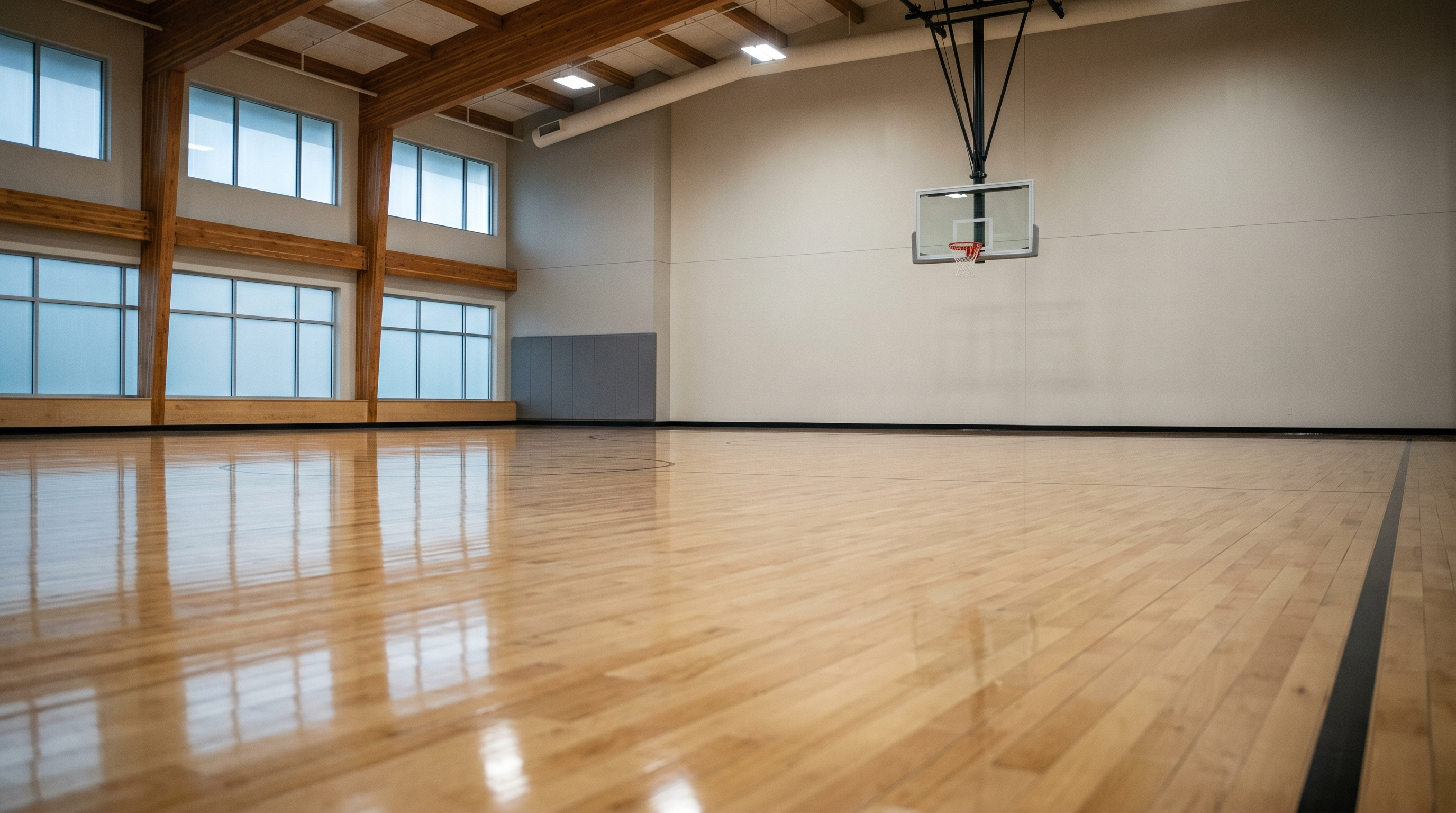
The indoor basketball courts are built within the packed sports venue. These could include a gymnasium, an academy, a school, a sports club, or any multi-purpose hall.
Since, in this case play areas are protected from all the climate conditions. Basketball court designers will have better control over lighting, ventilation, temperature and most importantly surface condition.
Indoor courts can use hardwood, polyurethane or synthetic sports flooring, depending on the required performance and facility type. Forsan's sports flooring range includes PU systems for indoor multi-sport halls.
Benefits of Indoor Basketball Courts
ü Consistent playing conditions: Players aren't affected by rain, wind or direct sunlight.
ü Year-round usability: Training and matches can continue regardless of outdoor weather.
ü Greater surface protection: Indoor flooring has less exposure to UV radiation, moisture, dust and temperature fluctuations.
ü Professional environment: Indoor facilities can include spectator seating, changing rooms, scoreboards, storage and specialist lighting.
ü Better environmental control: Cooling, ventilation and lighting can be designed around the needs of players and spectators.
Limitations of Indoor Basketball Courts
The biggest disadvantage is the higher construction investment.
An indoor court requires more than the playing surface. The project may also need structural works, roofing, electrical systems, lighting, and ventilation, air conditioning, seating and supporting facilities.
For a professional academy or high-use sports venue, these additional costs may be justified. For a small community facility, however, an outdoor court may provide better value.
What Is an Outdoor Basketball Court?
An outdoor basketball court is constructed in an open environment such as a school, residential community, public park, sports complex or private property.
Outdoor courts need surfaces and supporting structures that can withstand the local climate. Acrylic is a common choice because it can provide suitable traction and durability for outdoor basketball.
Forsan provides UV-stable acrylic flooring for outdoor tennis and basketball courts, with systems designed around the demands of the UAE climate.
Benefits of Outdoor Basketball Courts
ü Lower construction complexity: There's no requirement for a complete enclosed sports building.
ü Flexible installation: Courts can be incorporated into parks, schools, residential developments and recreational areas.
ü Cost-effective: The absence of a large indoor structure can reduce initial construction requirements.
ü Natural ventilation: Players can benefit from outdoor airflow.
ü Suitable for recreational use: Outdoor courts work particularly well for casual games, school activities and community basketball.
Limitations of Outdoor Basketball Courts
Outdoor courts are exposed to environmental conditions. Strong sunlight, dust, moisture and temperature changes can affect the playing surface over time.
Rain can also temporarily stop play. Poor drainage may allow water to collect on the court, potentially contributing to surface deterioration.
This is why site preparation and drainage design should be treated as core parts of outdoor basketball court construction rather than afterthoughts.
Which Basketball Court Surface Is Better?
There isn't one surface that's best for every project. The right system depends on the court environment, expected usage and performance requirements.
o Indoor Court Surfaces
Indoor facilities can use:
- Hardwood sports flooring
- Polyurethane flooring
- Synthetic sports flooring
- Modular sports flooring
For multi-sport facilities, PU systems can provide a seamless playing surface with shock absorption and suitable sports performance characteristics.
o Outdoor Court Surfaces
Outdoor basketball courts commonly use acrylic sports surfacing over a properly prepared base.
A quality outdoor system should provide:
- Suitable traction
- UV resistance
- Weather durability
- Consistent ball response
- Clear line markings
- Easy maintenance
However, the surface is only one part of the system. The underlying base, drainage and installation quality also influence long-term performance.
Indoor vs Outdoor Basketball Court Maintenance
Maintenance is another major difference.
o Indoor Court Maintenance
Indoor courts typically need:
- Regular cleaning
- Surface inspections
- Equipment checks
- Line marking maintenance
- Repairs when necessary
- Periodic refinishing for certain surfaces
The controlled environment reduces exposure-related deterioration.
o Outdoor Court Maintenance
Outdoor courts may require:
- Regular cleaning
- Drainage inspections
- Crack repairs
- Surface recoating
- Line repainting
- Equipment inspections
- Removal of sand, leaves and debris
In the UAE, UV exposure and high temperatures make the choice of outdoor surface particularly important. Using systems designed for local conditions can help improve long-term performance.
Ø Which Is Safer for Players?
Both indoor and outdoor basketball courts can provide safe playing conditions when properly designed and maintained.
Indoor courts have an advantage in environmental control. Outdoor courts, however, can also deliver safe performance when the surface provides suitable grip and the court has proper drainage, lighting, surrounding safety areas and quality equipment.
The quality of construction is ultimately more important than simply choosing indoor or outdoor.
Indoor vs Outdoor Basketball Courts: Which Should You Choose?
Your intended use should guide the decision.
o Choose an Indoor Basketball Court If You:
· Operate a basketball academy or sports club
· Plan to host tournaments
· Need reliable year-round use
· Require controlled playing conditions
· Expect intensive daily usage
· Want a complete professional sports facility
o Choose an Outdoor Basketball Court If You:
· Need a recreational court
· Are developing a school or residential community
· Have suitable outdoor space
· Want a simpler construction project
· Primarily expect casual or community use
· Need to control the initial construction investment
What Should You Consider Before Construction?
Before choosing your court type, assess five important factors.
1. Site Conditions
Evaluate available space, soil conditions, access, surrounding structures and drainage requirements.
2. UAE Climate
For outdoor projects, consider heat, UV exposure, dust and rainfall. The surface and construction system should be selected accordingly.
3. Intended Usage
A professional training academy has different requirements from a residential community.
Consider expected daily usage, operating hours, player levels and whether competitions will be hosted.
4. Supporting Facilities
Consider lighting, fencing, seating, basketball equipment, access routes, drainage and storage alongside the playing surface.
5. Long-Term Maintenance
Don't compare projects based only on their initial price. Consider resurfacing, repairs, cleaning and other maintenance requirements throughout the court's service life.
Why Choose Forsan Alamal Alsarea?
Building a basketball court requires more than installing a sports surface. Proper site preparation, flooring selection, drainage, installation and finishing all contribute to the final result.
Forsan Alamal Alsarea provides turnkey sports facility solutions across the UAE, covering sports flooring, basketball courts and other sports facilities. The company states that it has delivered more than 350 projects across all seven Emirates, with in-house manufacturing, certified installers, and after-sales maintenance support.
Its sports flooring solutions include acrylic systems for outdoor basketball courts and PU systems for indoor multi-sport facilities.
If you're planning a basketball court, the team can assess your site, recommend a suitable surface system, and develop a solution around your intended use.
Key Takeaways
- Indoor basketball courts are better suited to professional, competitive, and year-round use.
- Outdoor basketball courts are practical for schools, communities, parks, and recreational facilities.
- Outdoor court construction requires careful attention to UV exposure, drainage, surface selection, and site preparation.
- The right choice depends on your budget, location, usage requirements, and long-term maintenance expectations.
- A professionally designed court can deliver reliable performance in either environment.
Frequently Asked Questions
Is an indoor basketball court better than an outdoor court?
If you are considering a basketball court for year-round training without disturbing your schedule, then indoor courts are the better option. However, outdoor courts are a better choice for recreational activities.
What is the best surface for an outdoor basketball court?
Acrylic sports surfacing is a popular choice for outdoor basketball courts. The system should be selected based on the base, climate, expected usage, drainage, and required playing performance.
Are outdoor basketball courts suitable for the UAE climate?
Yes, but the court should be designed for local conditions. UV-stable surfacing, appropriate base preparation, and effective drainage are important considerations for outdoor basketball facilities in the UAE.
Are indoor basketball courts more expensive?
Usually, yes. Indoor courts require an enclosed structure and may also require roofing, cooling, ventilation, lighting and other building infrastructure. Outdoor courts generally have fewer structural requirements.
Build Your Basketball Court With Forsan
Whether you're planning an indoor basketball facility, outdoor community court or multi-sport venue, the right construction approach starts with your site and project goals.
Forsan Alamal Alsarea can help you design and build a basketball court suited to your requirements and the UAE environment.
Ready to start your project? Contact Forsan for a site assessment and tailored basketball court proposal.