
How Can You Build a Profitable Indoor Kids Play Area With Limited Space?
A small indoor play area can still become a big business.
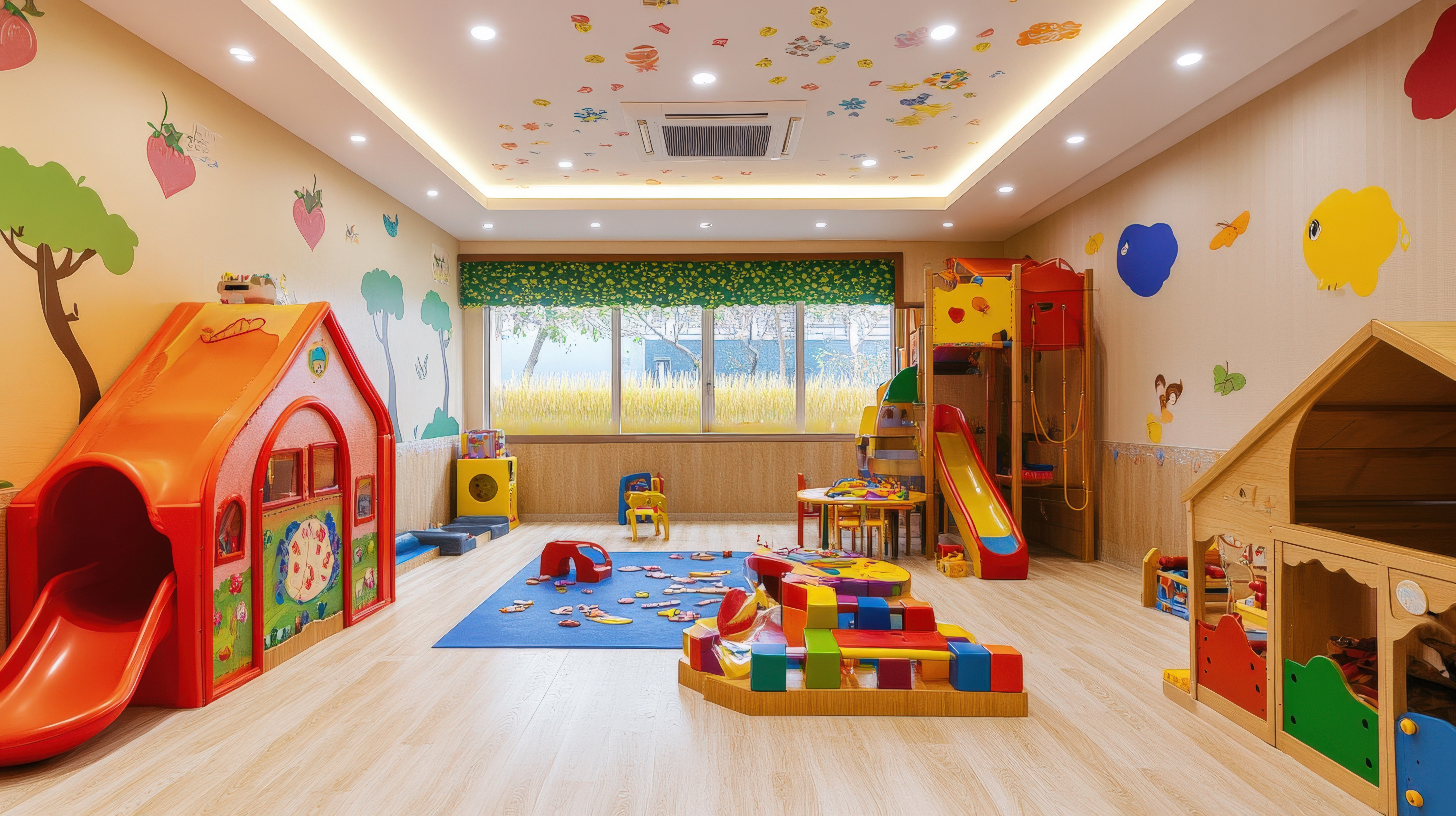
How Can You Build a Profitable Indoor Kids Play Area With Limited Space?
A small indoor play area can still become a big business. The main thing isn't filling every corner with colorful equipment. It's about creating a high-value play experience from every square meter. While keeping the facility safe, easy to supervise, and commercially practical.
For businesses, schools, family entertainment centers, and property developers in the UAE, limited floor space doesn't have to stop an indoor kids play project.
With smart planning, vertical layouts, multi-functional equipment, and the right flooring system, a compact kids play area can serve different age groups and generate multiple revenue opportunities. Here's how to approach it.
Why Limited Space Doesn't Mean Limited Profit
A larger play center isn't automatically more profitable. A compact indoor kids play area can have several advantages:
- Lower rental and operating costs
- Easier cleaning and maintenance
- Better staff visibility
- More manageable visitor capacity
- Efficient use of equipment
- Lower initial investment than a large facility
The real business question is:
How much value can you generate from every square meter?
That means your layout, equipment, safety features, and revenue model need to be planned together.
1. Analyze the Space Before Choosing Equipment
Start with the building, not the playground equipment.
Measure the available floor area and assess:
- Ceiling height
- Columns and structural obstacles
- Entry and exit points
- Emergency routes
- Storage requirements
- Parent seating
- Reception space
- Toilets and changing facilities
- Electrical and ventilation requirements
Also identify your target users. The Kids Pay area is also could be toddler play center. This would require a different layout
A toddler play center will require a different layout from a facility designed for children aged 6 to 12. With a professional site, assessment will help you to get an idea about what can realistically fit into available footprint.
2. Use Vertical Space to Increase Play Value
When floor space is limited, look upwards.
A multi-level play structure can combine several activities within one footprint. Depending onthe building's height and applicable safety requirements, a compact structure could incorporate:
- Climbing features
- Platforms
- Tunnels
- Bridges
- Slides
- Crawl-through sections
- Ball play
- Interactive panels
This allows children to experience different activities without requiring a separate floor area for every attraction.
However, vertical equipment needs careful planning. Fall protection, access, structural requirements, supervision and safe clearances must be considered before installation.
3. Choose Multi-Functional Kids Play Equipment
In a small facility, every component needs to justify its footprint.
Instead of installing separate structures for climbing, crawling, balancing and sliding, consider integrated play systems that combine several activities.
For example:
Climb → balance → crawl → explore → slide
This creates a continuous play journey while making better use of limited space.
Modular equipment can also provide flexibility. Selected components may be rearranged or updated as your business grows and customer preferences change.
4. Divide the Play Area by Age
A compact facility still needs effective zoning.
Young children and older children have different physical abilities, speeds and play behaviours. Mixing them without proper planning can create unnecessary safety and supervision challenges.
a. Toddler Zone
Use low-height, soft and age-appropriate elements for crawling, exploration and basic motor development.
b. Main Play Zone
Older children can use more challenging climbing, balancing, sliding and interactive features.
c. Quiet or Sensory Zone
A smaller area can provide puzzles, building activities, sensory play or a calmer environment for children who need a break from active play.
Clear zoning makes the facility easier to supervise and improves the experience for different age groups.
5. Make Safety Flooring a Priority
The surface beneath the equipment is just as important as the equipment itself.
Falls are a normal part of children's play. The objective is to create a surface that helps reduce the severity of falls while providing suitable traction and comfort.
Forsan Alamal Alsarea provides EPDM rubber flooring for kids play areas, designed as impact-attenuating surfacing for playground environments. The company also highlights slip resistance, durability and suitability for the UAE climate as important flooring considerations.
When selecting a play surface, consider:
- Impact absorption
- Slip resistance
- Durability
- Cleaning requirements
- Drainage where relevant
- UV and climate exposure
- Maintenance requirements
The appropriate system should be selected according to the equipment, fall heights, site conditions, and applicable safety requirements.
6. Design for Clear Visibility
A profitable play center must also be easy to operate. Parents want to see their children. Staff need to monitor the play environment efficiently.
Avoid unnecessary blind spots created by poorly positioned structures, partitions or oversized decorative elements.
A good layout should provide:
- Clear sightlines
- Controlled entry and exit
- Logical circulation
- Accessible supervision routes
- Separation between high-energy and low-energy activities
Don't try to use every available centimeter. Strategic open space can improve both safety and operational efficiency.
7. Create a Comfortable Parent Area
Children may be the users, but parents are the decision-makers. A compact seating area can improve the overall customer experience without consuming excessive floor space.
Consider:
- Comfortable seating
- Small tables
- Wi-Fi
- Charging points
- Clear views into the play area
- Refreshment options where practical
When parents are comfortable, they're more likely to stay longer and return.
8. Create Multiple Revenue Streams
Admission fees don't have to be your only source of income. A small indoor kids play area can generate additional revenue through:
I. Memberships
Monthly, quarterly or annual memberships can encourage repeat visits.
II. Birthday Parties
Birthday packages can offer considerably more value per booking than standard admission.
Packages could include:
- Play access
- Reserved seating
- Decorations
- Food and drinks
- Party hosting
- Cake arrangements
III. Group Bookings
Schools, nurseries and community organizations can provide opportunities for scheduled group visits.
IV. Special Events
Seasonal activities, school-holiday programmes and themed play sessions can give families additional reasons to return.
The objective is simple: increase revenue per visitor without increasing your floor area.
9. Make One Space Serve Multiple Purposes
Limited space becomes more valuable when it can support different activities at different times.
For example, a seating area could function as a parent lounge during normal hours and become a birthday party area during private bookings. Modular equipment and movable furniture can make these transitions easier.
This creates a more flexible business model without requiring a larger property.
10. Plan Operating Costs Before Construction
Profitability depends on both revenue and expenses.
Estimate your expected:
- Rent
- Staffing costs
- Electricity
- Air conditioning
- Cleaning
- Maintenance
- Insurance
- Marketing
- Equipment replacement
Quality materials can be worth the investment when they reduce frequent repairs and downtime.
Forsan Alamal Alsarea approaches sports and play projects as complete systems, covering areas such as consultation, design, civil works, surfacing, equipment installation and ongoing maintenance.
That type of end-to-end planning can help prevent expensive changes after construction has started.
11. Build the Business Around Repeat Visits
One-time visitors create sales.
Repeat customers create a business.
Give families reasons to return through:
- Membership benefits
- Loyalty programs
- New play challenges
- Seasonal events
- School-holiday activities
- Parent-child sessions
- Birthday packages
- Special weekday offers
You don't need to rebuild the entire play area every year. New activities and events can refresh the customer experience without a major structural investment.
How to Measure the Profit Potential of a Small Play Area
A simple starting formula is:
Revenue − Operating Costs = Operating Profit
But don't stop there.
For a limited-space facility, also consider:
Revenue per square meter
This helps you understand whether your layout is commercially efficient.
A smaller facility with strong memberships, party bookings and repeat visits may outperform a larger facility with higher rent and underused space.
A Smart Model for a Compact Indoor Kids Play Area
The most effective approach is to connect every part of the project:
Limited space
↓
Smart site planning
↓
Vertical and multi-functional equipment
↓
Age-based zoning
↓
Impact-attenuating flooring
↓
Clear visibility and supervision
↓
Multiple revenue streams
↓
Repeat customers
This turns space limitations into a design challenge rather than a business limitation.
Key Takeaways
- Maximize every square meter instead of simply adding more equipment.
- Use vertical and multi-functional play systems to increase activities within a compact footprint.
- Choose appropriate safety flooring and plan safety clearances from the beginning.
- Build multiple revenue streams through memberships, birthday parties, group bookings and special events.
- Design for repeat visits so the facility generates long-term customer value.
Why Choose Forsan Alamal Alsarea for Your Kids Play Area?
Building a successful indoor kids' play area requires more than installing colorful equipment. The flooring, layout, safety, equipment, and long-term maintenance all need to work together.
Forsan Alamal Alsarea provides turnkey sports and play-area solutions across the UAE, including kids' play areas with EPDM flooring, equipment, and related installation services. Its project approach covers consultation, site assessment, design, material specifications, installation and maintenance.
If you have a limited space and want to turn it into a safe, engaging and commercially viable kids play area, talk to the Forsan Alamal Alsarea team about your project requirements and request a tailored proposal.
FAQs
Can a small indoor kids' play area be profitable?
Yes. Profitability depends on how efficiently you use the available space and how effectively you generate revenue from admissions, memberships, birthday parties, group bookings and special activities. A smaller facility can also have lower operating costs than a large center.
What is the best flooring for an indoor kids play area?
EPDM rubber safety flooring is one option for children's play areas because it can provide impact attenuation and a cushioned playing surface. The correct system depends on the equipment, fall heights, substrate, usage and applicable safety requirements.
How can I maximize a small indoor play area?
Use vertical space where appropriate, select multi-functional equipment, create clear age zones and avoid unnecessary circulation areas. Flexible furniture and modular equipment can also allow the same space to support different activities.
How can an indoor kids play area generate additional income?
Beyond admission fees, operators can introduce memberships, birthday party packages, group bookings, holiday programs, workshops, and special events. These revenue streams can increase income without requiring a significantly larger facility.