
10 Mistakes To Avoid When Constructing A Sand Volleyball Court In The UAE
Find out the most common mistakes in sand volleyball court construction in the UAE. This guide helps you build safer and more professional sports facilities.
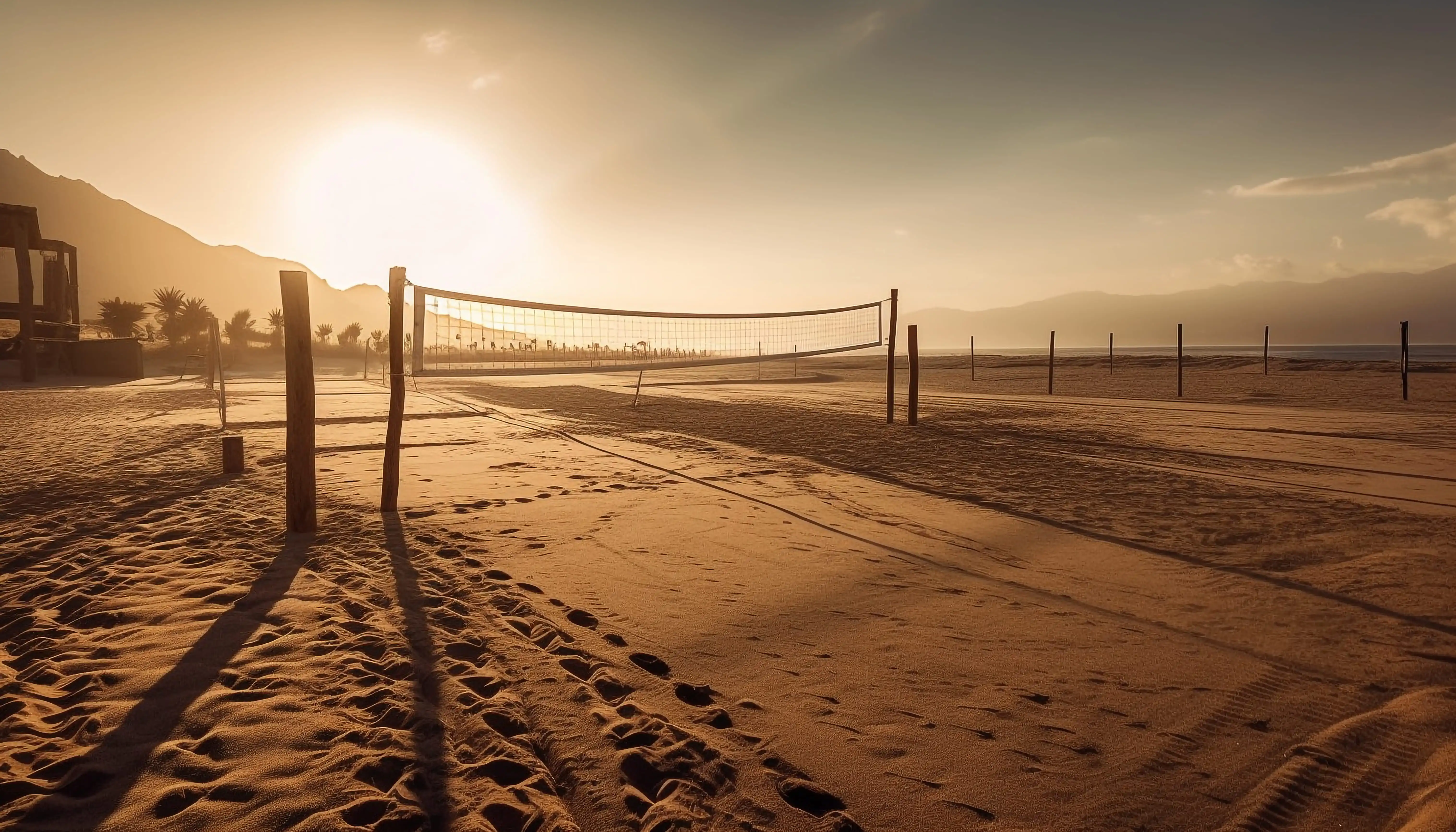
Constructing a sand volleyball court in the UAE is a very technical process that requires proper planning, engineering knowledge, and understanding of the environmental conditions. In order to ensure their safety, durability, and consistent performance, industry best practices as well as construction standards are always followed in professional sports facility projects.
This is not just about leveling land and adding sand. It's about developing a permanent sports facility that can perform consistently in extreme climate conditions.
The UAE environment is associated with various challenges, including high temperatures, exposure to strong UV, changing sand movement, and sometimes heavy rain. All these elements directly affect the surface quality, player safety, and maintenance needs.
There are several projects that don't succeed because they ignore early engineering decisions. A well-designed court will provide improved gaming experiences, longevity, and lower maintenance expenses. Even a minor mistake in the planning phase of a sports facility can make a huge difference in the long-term use of a facility.
Proper planning in the early stages can avoid expensive construction problems in the future. Further, a professional site evaluation ensures that a project starts off on the right foundation.
Table of Contents
· Why Proper Construction Matters
· Key Planning Considerations
· 10 Mistakes to Avoid
· Construction Checklist
· Importance of Professional Contractors
· FAQs
· Conclusion
Why Proper Construction Matters
A sand volleyball court is a performance-based sports surface where every design decision directly affects gameplay quality and safety. In professional construction practice, courts are designed using established sports facility engineering principles to ensure consistent performance.
Poor construction can lead to multiple operational and safety issues that become more visible over time rather than immediately after installation.
Common issues include:
· Uneven playing surface affecting movement and balance
· Overheating of sand during peak UAE daytime hours
· Drainage issues that weaken the base structure
· Higher risk of injuries during jumps and dives
· Increased maintenance and repair costs over time
Conversely, a top-quality court will provide stability, comfort, and durability in the UAE climate and can be used for recreational or competition purposes.
Key Planning Considerations Before Construction
To learn about mistakes, you must first know the critical planning components for successful projects. These factors are aligned with common sports infrastructure development practices used in professional facility construction.
Climate Impact Considerations
Weather conditions in the UAE are a significant factor in the performance of sports courts and the choice of sports materials.
The heat, UV exposure, and wind conditions directly influence sand quality and surface usability.
· High heat increases sand surface temperature during daytime use
· UV exposure reduces material durability if not selected properly
· Wind carries dust and affects cleanliness and maintenance cycles
At this stage, careful planning helps to prevent long-term usability problems.
Surface Performance Requirements
A sand volleyball court must provide a balance between comfort and stability. This balance is of paramount importance in sports engineering standards for safe athletic movements and injury prevention.
· Soft enough for safe landings during jumps and dives
· Stable enough to allow fast directional movement
· Even surface distribution across the entire court area
This balance is achieved through correct sand selection, depth control, and proper leveling techniques.
Drainage and Base Structure
Although sand is a permeable material, good drainage is still necessary beneath the surface layer. In professional construction standards, sub-surface drainage design is regarded as one of the main requirements for outdoor sports facilities.
Without it, the court structure becomes weak over time.
· Prevents water accumulation after cleaning or rain
· Protects sub-base layers from damage
· Maintains consistent surface behavior over time
An effective drainage and base system will provide long-term stability and lower future repair costs. Expert design at the beginning can save much maintenance work in the future.
Common Mistakes to Avoid in Sand Volleyball Court Construction in the UAE
In fact, a failure in the construction of sports courts is not caused by one major problem, but by the accumulation of a number of minor planning mistakes. These errors may not be noticed initially, but over time, they can affect the performance, safety, and durability of the court.
These errors usually affect:
· Surface quality
· Player safety
· Drainage performance
· Maintenance cost
· Long-term durability
Even in professional sports facility projects, overlooking small engineering details during planning can lead to major performance issues later.
Now let’s explore them in detail.
Mistake #1: Ignoring UAE Climate Conditions
In the UAE, one of the most critical design considerations for a sand volleyball court is climate. Extreme heat, UV exposure, and dusty wind conditions are factors that directly impact the performance of the court throughout the year.
When neglected, they create long-term usability problems later that are hard to resolve.
Problems include:
· Sand overheating during daytime use
· Reduced usability during peak sun hours
· Faster material degradation under UV exposure
Better approach:
· Optimize court orientation for sun direction
· Use UV-resistant and heat-resistant materials
· Plan shaded zones if possible for comfort
Mistake #2: Using Incorrect Sand Type
The type of sand will determine the quality of the game, safety, and durability. For professional sports court construction, sand grading and particle shape are important performance factors.
The common mistake in construction is the use of inferior-quality sand for the construction work.
Problems caused:
· Dust-heavy sand reduces visibility and comfort
· Sharp particles increase injury risk during dives
· Poor drainage leads to water retention issues
Recommended solution:
· Washed, rounded sports-grade sand (industry standard for volleyball courts)
· Consistent grain size for uniform play
· Low dust content for better air quality and comfort
Good sand will also result in lower maintenance costs over the years and good ball response on the surface during the game.
Mistake #3: Skipping Soil Testing
Soil testing is not something to be ignored, and it is part of the engineering process. It is a standard requirement in sports infrastructure development before foundation design.
Without it, the foundation design becomes guesswork.
Risks include:
· Uneven settlement of court base
· Weak structural support over time
· Drainage system failure under load
Proper method:
· Conduct geotechnical investigation
· Analyze soil strength and composition
· Design base layers according to findings
Soil testing also helps prevent any surprises of the soil sinking or shifting after it has been installed, and this may be costly to fix.
Mistake #4: Incorrect Sand Depth
Sand depth plays a major role in both performance and safety. In sports facility guidelines, maintaining uniform depth is essential for consistent gameplay conditions.
If not maintained properly, it affects player movement directly.
Issues:
· Too shallow leads to hard surfaces and injuries
· Too deep causes slow movement and instability
Standard approach:
· Maintain uniform 12–18 inch depth
· Ensure proper leveling across entire court area
· Regular inspection after installation
A consistent depth also ensures fair gameplay conditions across the entire court surface.
Mistake #5: Poor Drainage Design
Drainage is not optional, but a structural necessity. In the construction of a professional outdoor sports facility, sub-surface drainage is a common engineering need to ensure long-lasting performance.
Without it, long-term damage is inevitable.
Problems include:
· Water trapped beneath the surface layer
· Sand compaction over time
· Weakening of base foundation
Recommended system:
· Gravel sub-base for filtration
· Geotextile membrane for separation
· Perforated drainage pipes for water flow
Long-term court durability is dependent on proper drainage design. Professional engineering guarantees a stable and low-maintenance sand volleyball court in all weather conditions.
Mistake #6: Weak Net Post Installation
Net posts experience continuous tension during gameplay and must be installed properly to ensure safety and stability.
Common issues:
· Movement during matches
· Misalignment over time
· Structural instability
Proper installation:
· Deep concrete foundation system
· Steel reinforcement sleeves
· Precise alignment with court layout
Strong installation also prevents vibrations during intense matches, improving the overall game experience.
Mistake #7: Ignoring Court Dimensions and Safety Zones
Incorrect layout planning directly affects usability and safety. Standard sports facility design guidelines always include buffer zones for player movement and injury prevention.
Problems include:
· Limited movement space for players
· Unsafe diving zones
· Non-standard court setup
Proper design includes:
· Standard 16m x 8m playing area
· Proper safety buffer zones around court
· Clear marking for boundaries and movement
These zones are crucial for recreational and professional usage.
Mistake #8: Inadequate Fencing
Fencing plays a major role in controlling the gameplay area and maintaining safety and cleanliness.
Without proper fencing, operational issues increase over time.
Issues:
· Balls leaving court frequently
· Sand spreading outside boundary
· Reduced safety and control
Better solution:
· Strong perimeter fencing system
· Wind-resistant mesh structure
· Ball containment design integration
Good fencing also reduces maintenance effort by keeping sand inside the designated area.
Mistake #9: Poor Lighting Design
Lighting is essential for evening usage in UAE sports facilities due to high daytime temperatures.
Improper lighting reduces performance and safety.
Common issues:
· Uneven brightness across court
· Glare affecting player visibility
· Shadow zones during play
Proper setup:
· Anti-glare LED lighting systems
· Proper pole height and positioning
Appropriate lighting can greatly extend the usable hours of the facility.
Mistake #10: No Maintenance Plan
Sand volleyball court maintenance helps maintain proper functionality and surface quality. Even professionally built courts require routine maintenance as part of standard facility management practice.
Without it, even well-built courts degrade quickly.
Problems:
· Uneven surface formation
· Sand compaction over time
· Hygiene and usability issues
Recommended routine:
· Weekly raking and leveling
· Regular depth monitoring
· Sand replenishment when required
A good maintenance plan can guarantee constant performance and longer court life.
Sand Volleyball Court Construction Checklist
A structured checklist guarantees correct execution and decreases mistakes throughout the construction:
· Site survey completed
· Soil testing conducted
· Drainage system designed
· Sports-grade sand selected
· Court dimensions verified
· Safety zones marked
· Lighting layout approved
· Fencing finalized
· Maintenance plan prepared
This checklist acts as a final validation step before construction begins and helps avoid major design gaps.
Importance of Professional Contractors
Professional contractors bring technical accuracy and long-term reliability to sports facility projects. In sports infrastructure engineering, experience with UAE climate conditions and international court standards plays a major role in project success.
They ensure:
· Correct engineering design and execution
· Proper selection of materials for the UAE climate
· Compliance with international sports standards
· Reduced long-term maintenance costs
Experienced teams like Forsan Alamal Alsarea ensure sand volleyball courts are built with proper engineering principles suited for the UAE environmental conditions.
Conclusion
To sum up, constructing a sand volleyball court in the UAE demands careful engineering, appropriate materials, and comprehensive planning at every stage. When it involves developing a professional sports facility, even small mistakes can have a huge long-term effect on the performance and maintenance efficiency.
The well-designed court will enhance the gaming experience but also contribute to its durability and cost-efficiency in the long run. Thus, planning as well as execution are of utmost importance for any sports facility project.
Preventing these common mistakes can help developers ensure that the sand volleyball court is safe, efficient, and productive year-round in the UAE.
When designing a sand volleyball court in the UAE, technical planning is the first step towards a successful project. Forsan Alamal Alsarea can assist you in designing and providing a long-lasting, safe, and performance -driven sports facility suitable for UAE conditions.
FAQs
Q. What is the standard size of a sand volleyball court?
A. The standard size is 16m x 8m. However, additional safety areas are incorporated in professional setups. These additional areas enable players to move around, dive, and play safely without being at risk of injury close to boundaries.
Q. Which type of sand is used in a volleyball court?
A. The best option is washed, rounded sports-grade sand. It is specially processed to decrease dust, increase softness, and improve drainage. This type of sand is not only beneficial for maintaining consistent playing conditions but also for minimizing injuries during matches.
Q. What is the recommended depth for sand?
A. Sand is normally recommended to be 12-18 inches deep. This range will provide a soft surface suitable for safe landings while providing a firm feel for quick movement and professional-level play.
Q. Why is drainage important in sand courts?
A. Drainage prevents the accumulation of water below the surface layer. Failure to drain the water will lead to foundation problems, which will result in uneven surfaces, compaction, and shorten the life of the court.
Q. How frequently should maintenance be performed?
A. Basic maintenance should be carried out weekly, including raking and leveling of sand. Depending on usage, periodic inspections are also needed to ensure proper depth and surface consistency.
Q. Can sand volleyball courts be used at night?
A. Yes, they can be used at night if proper LED lighting systems are installed. Good lighting ensures clear visibility, minimizes glare, and creates a safe playing environment for users.
Q. Why is professional construction important?
A. Professional construction ensures correct engineering design, proper material selection, and long-term durability. It also reduces maintenance costs and ensures the court performs well under UAE environmental conditions.