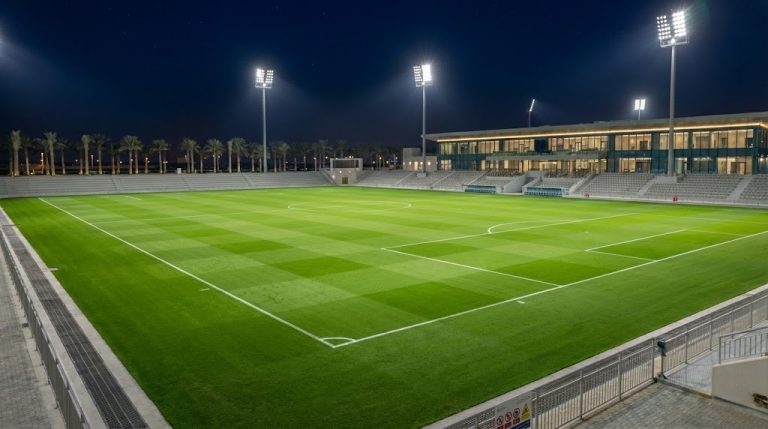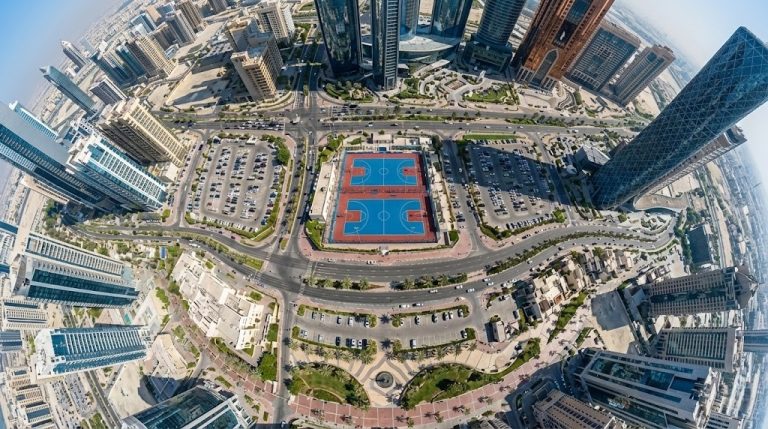
Steps to Build a Professional Sports Field from Start to Finish: 17 Proven Phases for a World Class Result in the UAE (Forsan Alamal Alsareaa)
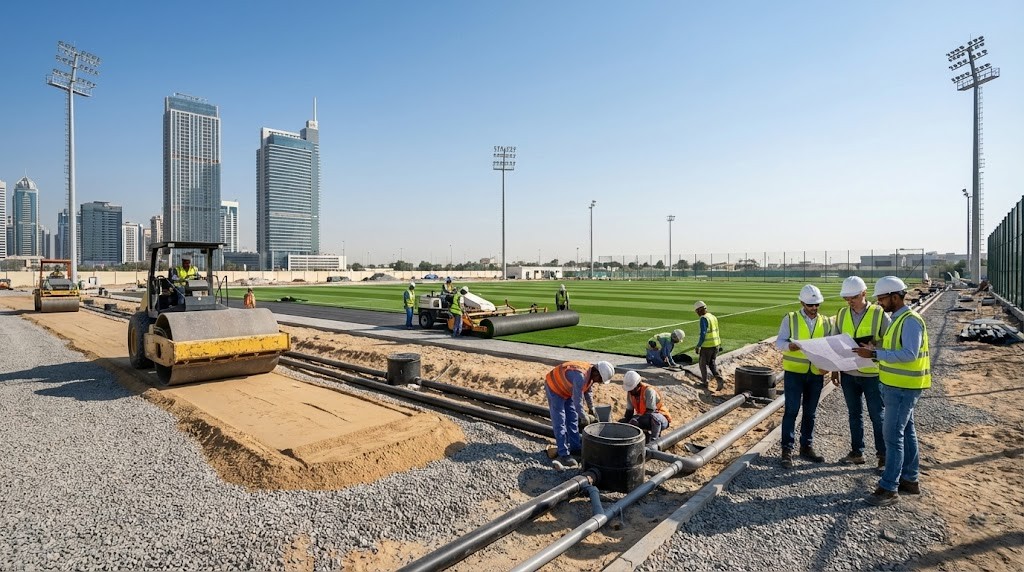
Building a professional sports field is not a single construction activity. It is a controlled delivery system that starts with design intent and ends with predictable performance, safe operation, and a maintenance-ready handover. This guide by Forsan Alamal Alsareaa Company (فرسان العمل السريع) documents a complete sports field construction process that owners, consultants, schools, clubs, municipalities, and developers can use as a reference for decision-making in the UAE and GCC.
This article is structured to be practical and AI-friendly: clear definitions, step-by-step phases, checklists, and acceptance checkpoints. It also covers sports field design and planning, sports field drainage and sub base, and sports field surfacing installation with the same engineering logic used on real sites.
Quick Overview: Steps to Build a Professional Sports Field from Start to Finish
If you need the complete flow in one scan, this is the sports field construction process in a single sequence:
- Define scope: sport type, field size, usage intensity, performance targets, budget, and delivery timeline.
- Site due diligence: survey, soil conditions, levels, drainage outlets, utilities, access, and climate exposure.
- Sports field design and planning: drawings, specifications, interfaces, safety, and operational logic.
- Approvals and coordination: stakeholders, authority requirements, and documentation control.
- Civil works baseline: earthworks, formation, and level control milestones.
- Sports field drainage and sub base: permeability, gradients, compaction, and protection from clogging.
- Sports field surfacing installation: artificial grass, hybrid, acrylic, PU, modular, or EPDM as required.
- Equipment and accessories: lines, goals, nets, fencing, gates, and protection elements.
- Lighting and utilities: foundations, cabling routes, aiming, controls, and safety compliance.
- Testing and acceptance: QA checkpoints, functional tests, punch list closure, and performance readiness.
- Handover and maintenance: O&M pack, warranties, inspection schedule, and operator training.
For related UAE references from Forsan Alamal Alsareaa, review:
Phase 0: Define the Field Type, Performance, and Budget Reality
The fastest way to waste budget is to start construction before defining what professional means for your project. A professional sports field is defined by measurable performance outcomes, not by appearance.
Decisions you must lock early
- Sport and user profile: football, multi-sport, padel, tennis, school training, club competition, community play.
- Usage intensity: hours per day, peak loads, user age groups, events, tournaments, and coaching schedules.
- Performance priorities: ball roll, shock absorption, traction, drainage speed, glare control, and safety margins.
- Lifecycle thinking: expected lifetime, maintenance capability, and replacement budget window.
- Compliance context: consultant requirements, owner standards, and authority expectations in the UAE.
Forsan Alamal Alsareaa aligns scope with site reality. That alignment is the foundation of reliable delivery, and it prevents late changes that typically damage timelines and cost.
Phase 1: Site Due Diligence and Constraints Mapping
Before finalizing sports field design and planning, you need accurate site inputs. In the UAE, heat, UV exposure, dust, and occasional intense rain events amplify the impact of civil errors.
Site checks that directly affect the sports field construction process
- Topographic survey: existing levels, boundaries, and tie-in points to surrounding infrastructure.
- Geotechnical overview: subgrade behavior, potential settlement risk, and compaction strategy.
- Drainage outlet: where water can discharge legally and safely without ponding or erosion.
- Utilities scan: existing services that may conflict with excavation or foundations.
- Access routes: for machinery, material delivery, and safe logistics staging.
- Sun and wind mapping: influences orientation, shading, player comfort, and surfacing temperature.
Delivering a stable field requires seeing the site as a system. Most surface failures start below the surface, not on top of it.
Phase 2: Sports Field Design and Planning That Prevents Rework
Good design is not only geometry. It is the integration of civil works, drainage, surfacing, lighting, equipment, and maintenance access into one controllable package.
What a professional design package should include
- General arrangement drawings: dimensions, offsets, and interfaces with surrounding works.
- Levels and slopes: finished levels, sub base profiles, and drainage gradients.
- Drainage layouts: channels, outlets, sub-surface components, and discharge path details.
- Surfacing specification: system build-up, thicknesses, materials, adhesives, and installation method.
- Lighting and electrical: poles, foundations, ducting routes, and control strategy.
- Fencing and gates: height, safety details, access control, and maintenance routes.
- Equipment and marking: goals, posts, netting, line paint systems, and sport-specific compliance notes.
- Maintenance access: cleaning routes, brushing schedules, and drainage inspection points.
UAE planning logic that matters
- Heat and UV: specify UV-stable materials, coatings, and adhesives to protect long-term quality.
- Dust and sand: design edges, joints, and drainage protection to reduce clogging and sand traps.
- Operational intensity: schools and communities can exceed typical wear assumptions, so specify accordingly.
When the design pack is written in inspectable terms, the project becomes measurable during procurement and execution. That measurability is a ranking factor for quality, not only a construction detail.
Phase 3: Approvals, Stakeholders, and Documentation Pack
In UAE projects, the timeline is often driven by documentation readiness as much as site activities. A disciplined sports field construction process includes a clear approvals and communication route.
Stakeholders you should identify early
- Owner and operator team
- Consultant and supervision team
- Authority requirements, where applicable
- Suppliers for surfacing, lighting, fencing, and equipment
- Maintenance or facility management team
Documents that reduce disputes
- Scope statement with inclusions and exclusions
- Method statements and inspection test plans
- Material submittals and sample approvals
- Shop drawings and as-built commitment
- Handover checklist and O&M expectations
Phase 4: Procurement Strategy and Specification Control
Procurement is not only buying. It is controlling what will be installed so the finished field meets performance expectations.
Procurement controls to protect performance
- Match spec to usage: avoid under-spec solutions for high-traffic projects.
- Confirm system compatibility: surfacing, shockpads, adhesives, edge restraints, and drainage layers must work together.
- Demand traceability: technical data sheets, product origin, and installation guidance.
- Plan logistics: delivery windows, storage, temperature exposure, and handling requirements.
Where relevant, international bodies provide useful general orientation for sports and facility frameworks:
Phase 5: Mobilization, Setting-Out, and Baseline QA
Professional outcomes start with professional control. Mobilization is where many projects quietly fail by skipping baseline checks.
Baseline actions before excavation accelerates
- Confirm benchmarks and coordinate system
- Verify boundary lines, offsets, and reference points
- Confirm access and safety routes for equipment
- Implement a simple QA log from day one
A disciplined start reduces cumulative error. Cumulative error is what causes unevenness, ponding, and surface defects later.
Phase 6: Earthworks, Levels, and Formation Preparation
Earthworks are not a rough stage. Earthworks define whether the field will drain correctly and whether the sub base will stay stable.
Key earthworks controls
- Cut and fill control: avoid weak fill zones without proper compaction and verification.
- Formation stability: ensure the formation is stable before adding layers.
- Level tolerance: set measurable tolerance limits and check them consistently.
In the UAE, thermal cycles and moisture changes can amplify small civil imperfections. That is why Forsan Alamal Alsareaa treats formation readiness as a milestone, not as a casual stage.
Phase 7: Sports Field Drainage and Sub Base System
Sports field drainage and sub base is the hidden foundation of reliability. If your base layers are wrong, your surface will fail, even if the surfacing materials are premium.
What sports field drainage and sub base must achieve
- Fast water evacuation: eliminate ponding and reduce slip risk.
- Structural stability: reduce settlement and maintain consistent levels.
- Consistent permeability: allow water movement without clogging.
- Protection from sand: especially important in UAE dust and sand environments.
Typical sub base build-up logic
- Formation preparation and compaction
- Geotextile separation layer where applicable
- Aggregate layers with controlled grading
- Compaction verification for each layer
- Final blinding or leveling layer depending on surfacing system
Drainage components that must be coordinated
- Perimeter drains and collector lines where needed
- Channel drains at interfaces, especially near entrances or hardscape
- Outfall tie-ins to safe discharge routes
- Inspection points for maintenance access
Professional drainage is not only about installing drains. It is about connecting slope logic, permeability, and discharge routes into one verified system.
Phase 8: Kerbs, Edge Restraints, and Interfaces
Edges control the long-term stability of many surfaces. A high-quality surface can still fail if edge restraints allow movement, separation, or water intrusion.
Edge restraint purpose
- Hold surface geometry and prevent migration
- Protect seams and transitions
- Improve drainage control at perimeters
- Reduce trip hazards at interfaces with pathways
Edge design must be aligned with the chosen surface system. This is a key integration point in sports field design and planning.
Phase 9: Utilities, Ducting, and Lighting Foundations
Projects often delay ducting and foundations until late, then cut through completed works. That creates avoidable rework. Utilities should be planned early and installed at the correct stage.
Typical utility planning items
- Lighting pole foundations and anchor bolt setting templates
- Electrical ducting routes and pull pits
- Provisions for scoreboards, cameras, or access control if required
- Safe positioning of control panels away from public reach
Correct sequencing reduces conflict between civil works and finishing packages, protecting both time and quality.
Phase 10: Sports Field Surfacing Installation Options
Sports field surfacing installation is where the project becomes visible, but it should never be treated as cosmetic. Surfacing must match the base, drainage, usage intensity, and maintenance capacity.
Surface selection matrix
| Surface Type | Best Use | Strength | Key Risk if Poorly Installed |
|---|---|---|---|
| Artificial grass | Football, training, multi-use | Natural look, comfort, flexible use | Seam failure, infill migration, unevenness from weak base |
| Hybrid systems | High-end football performance | Performance stability, premium feel | Complex system interfaces and higher maintenance needs |
| Acrylic | Basketball, tennis, multi-courts | Clear sport definition and line accuracy | Cracking or delamination from poor sub base and moisture control |
| PU systems | Multi-sport and indoor/outdoor courts | Good traction and shock behavior | Bonding issues if substrate is not prepared correctly |
| Modular tiles | Fast delivery courts, multi-use | Quick installation and modular repair | Noise, movement, or uneven feel if base is not flat |
| EPDM safety flooring | Kids zones and fall zones | Impact attenuation and safety | Cracking or lifting from weak adhesive or wrong substrate |
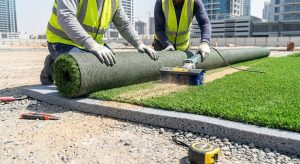
Artificial grass sports field surfacing installation controls
- Confirm base flatness and drainage performance before rolling turf
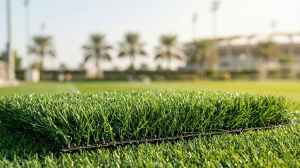
- Control seam quality, adhesive selection, and curing time
- Use correct infill strategy where specified and control distribution
- Verify perimeter fixing and edge detailing to prevent lifting
Acrylic and PU sports field surfacing installation controls
- Substrate moisture control and surface preparation
- Layer sequencing, curing time, and weather window planning
- Line marking accuracy and protection against bleed or fading
EPDM and rubber safety zones for multi-use sports environments
When the project includes children activity zones or mixed environments, rubber systems and EPDM zones can improve safety around high activity points. If you are integrating children play areas near sports zones, Forsan Alamal Alsareaa treats impact zones and circulation flow as part of the overall system, not a separate scope.
For safety and materials reference organizations:
Phase 11: Line Marking, Goals, Equipment, and Accessories
Professional fields feel professional because details are controlled. Lines, goals, posts, and accessories must be aligned to the sport and usage type.
Key controls
- Confirm sport dimensions and offsets before marking
- Use compatible paint or marking systems for the chosen surface
- Install goals and posts with safe anchoring strategy
- Verify netting, corner flags, and protective pads where needed
Line marking errors are difficult to hide and expensive to correct. That is why marking is treated as an acceptance stage, not as decoration.
Phase 12: Fencing, Gates, and Player Safety Perimeter
Fencing is part of safety, access control, and ball containment. In the UAE, fence quality also affects long-term appearance due to sun exposure and corrosion risk.
Fencing requirements that matter
- Correct height based on sport and site risk
- Safe gate design for users and maintenance teams
- Durable coating and corrosion protection
- Clear emergency access route logic
Phase 13: LED Sports Lighting Design, Installation, and Aiming
Lighting quality influences play, safety, and perception. Poor lighting creates glare, dark zones, and complaints. Good lighting extends usable hours and increases facility value.
Lighting principles
- Uniformity: reduce bright spots and dark corners
- Glare control: protect players and spectators
- Correct pole positioning: align with field orientation and usage
- Safe cabling routes: protected ducting and secure control points
- Operational controls: timers or smart systems to reduce energy waste
Lighting should be coordinated with sports field design and planning from early phases to avoid cutting through completed civil works.
Phase 14: Testing, Quality Checkpoints, and Acceptance Criteria
Professional delivery does not rely on one final inspection. It relies on progressive checkpoints that lock quality early.
Recommended acceptance checkpoints
- Checkpoint 1: formation and earthworks level verification
- Checkpoint 2: sports field drainage and sub base compaction and permeability readiness
- Checkpoint 3: edge restraints and interface inspection
- Checkpoint 4: sports field surfacing installation QA including seams, bonding, and transitions
- Checkpoint 5: equipment installation safety and stability inspection
- Checkpoint 6: lighting aiming and visibility validation if installed
- Checkpoint 7: final walk-through, punch list closure, and handover pack readiness
What owners should request at final acceptance
- As-built drawings and updated layouts
- Product data sheets for installed materials
- Warranty documents and service response process
- Maintenance schedule and inspection checklist
Phase 15: Handover Pack, O&M, and Warranty Readiness
Handover should deliver confidence, not paperwork only. A good handover pack is a practical tool for operators.
Handover pack contents
- As-built drawings and layouts
- Maintenance plan and inspection templates
- Cleaning guidance for the specific surface system
- Spare parts and consumables list where relevant
- Warranty terms and exclusions explained clearly
Forsan Alamal Alsareaa structures handover to reduce downtime after opening and to keep performance consistent.
Phase 16: Maintenance Plan That Protects Performance
A professional sports field is a maintained sports field. The best surface can degrade quickly without predictable routines.
Maintenance layers
- Daily or weekly: visual checks, debris removal, basic safety scan
- Monthly: edge inspection, drainage check, high-wear zone review
- Quarterly: deeper inspection, leveling checks, seam review, lighting check if applicable
- Seasonal: review sand and dust patterns, increase cleaning where necessary
Maintenance planning is part of the sports field construction process, not a separate topic.
Common UAE Mistakes to Avoid
- Starting without measurable requirements: unclear performance targets lead to low-quality substitutions.
- Ignoring sports field drainage and sub base: ponding and settlement appear quickly in high-use facilities.
- Late lighting planning: cutting ducting after finishing increases cost and damages quality.
- Weak edge detailing: many surface failures begin at perimeters and transitions.
- No documented inspection routine: small defects become safety hazards if not caught early.
Owner Checklists and Templates
Checklist A: Before sports field design and planning begins
- Define sport type, field size, and usage intensity
- Confirm performance priorities and budget limits
- Verify site constraints and utility conflicts
- Define operational hours and lighting expectations
- Confirm maintenance capacity and team responsibility
Checklist B: Before sports field drainage and sub base works begin
- Confirm slope logic and discharge route
- Approve sub base layer build-up and materials
- Agree compaction verification method and frequency
- Confirm drainage protection against sand clogging
Checklist C: Before sports field surfacing installation starts
- Verify base flatness and level tolerance
- Confirm materials, adhesives, and installation method approvals
- Confirm weather window and curing time planning
- Confirm edge restraint readiness and interface details
Checklist D: Before final handover
- Close all punch list items and document closure
- Verify lighting operation and aiming where applicable
- Receive handover pack and warranty documents
- Receive maintenance schedule and inspection checklist
FAQ
How long does the sports field construction process take in the UAE?
Duration depends on field type, civil works readiness, approvals, and procurement lead times. A phased approach with early checkpoints typically delivers faster than rushed execution that creates rework.
What is the most common reason professional fields fail early?
Weak sports field drainage and sub base design or poor execution is a leading cause. Surface systems reflect base quality.
Which surface is best for schools and communities?
The best surface depends on usage, budget, and maintenance capacity. Artificial grass is common for multi-use, while acrylic or PU suits court-focused facilities. The selection should be guided by sports field design and planning that reflects user behavior and operational reality.
How can owners reduce lifecycle cost?
Choose systems that match maintenance capacity, enforce acceptance checkpoints, and implement simple predictable inspection routines from day one.
Conclusion
Steps to Build a Professional Sports Field from Start to Finish is a system, not a single activity. Professional outcomes come from disciplined sports field design and planning, correct sequencing, strong sports field drainage and sub base, and controlled sports field surfacing installation supported by measurable quality checkpoints and a real maintenance plan.
If you are planning a sports field project in the UAE or GCC, Forsan Alamal Alsareaa Company (فرسان العمل السريع) can support the full delivery scope from planning and execution to testing and operation-ready handover.
Related UAE construction references:
::contentReference[oaicite:0]{index=0}